Cuban Salsa: Three Step Pivot Turns in Casino
The Three Step Pivot Turn is by far the most important traveling turn technique in Cuban Salsa. The technique is not just universal and versatile. It is the only turn technique that integrates 100 pct into any walk in any situation. And it’s one of the few techniques that work well for double turns.
Traveling turns are a signature feature of Cuban Salsa. “Vacilala” is a popular name for a traveling right turn. “Coca-Cola” is a popular name for a traveling left turn.
Many traveling turn techniques from other dance styles can be adapted to work more or less good in Cuban Salsa. But only the There Step Pivot Turn lives up to all requirements for the ideal turn technique for Casino.
What is a Three Step Pivot Turn
The classic Three Step Pivot Turn in Cuban Salsa is based on the natural way to do a traveling turn. The turn consists of three steps to complete the full turn. It’s divided into two halves of 180 degrees. A half turn between step “1” and step “2” and another half turn between step “2” and step “3”. The turn can continue again and again like rolling a barrel on its rim, a half turn at a time.
In the video, I do 10 traveling Three Step Pivot Turns in one sequence. This is the natural way to do traveling turns. Ask almost any child to do multiple turns. And they will reinvent Three Step Pivot Turns!
On a right curved line, the Three Step right turn must be more than 360 degrees. On a left curved line, it must be less than 360 degrees. And similar but opposite for the traveling Coca-Cola left turn.
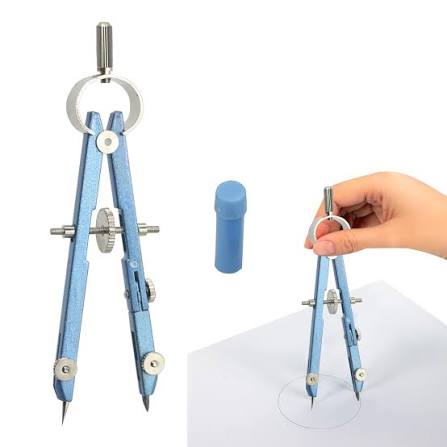
It is called a Pivot turn because the first step pivots around 180 degrees. The Follow has her back pointing forward as the second step hits the floor. The last half turn is created by moving the first leg around like the leg of a pair of compasses. This gives us a good descriptive name: Three Step Pivot-Compass.
An alternative method for the last half of the turn is to use Spiral Turn technique using figure “4” legs. This gives us a good descriptive name: Three Step Pivot-Spiral. This method is still surprisingly rare considering that it works very well in Casino. There is nothing “natural” over Spiral technique: It looks educated!
Video #1 shows the technique for a Three Step Pivot-Compass Turn. Pivot on the first step, landing with the heal in front on step “2”, getting the leg around like a leg of a pair of compasses on step “3”.
Video #2 shows the technique for a Three Step Pivot-Spiral Turn. Pivot on step “1”, landing with the heal first on step “2”, bringing the leg around with Spiral technique on step “3”.
How Follows Turn!
The 180 degrees between step “1-2” and between step “2-3” is the definition of a Three Step Pivot turn. However, the ratio between the two halves are often “135/225 degrees”, “90/270 degrees” or “45/225 degrees”, etc. What is missing of degrees in the first half must be added to the second half.
Most Follows just turn by muscle memory and have little feeling for how they actually turn. The different ratios are the result of bad technique or a result of errors and misunderstanding. The Lead’s leading might have been too early or too late, too soft or too strong. The dancers might have been badly positioned at the start of the turn. The Follow might have been taken by surprise. Or the Follow was not in perfect balance at the start of the turn, etc.
Video #3 shows Three Step Pivot turns with Compass and Spiral technique. The 360 degrees are divided unevenly between the two “halves”: 45/315 degrees, 90/270 degrees, 135/225 degrees.
The different ratios of the two halves can also be the result of a deliberate choice of the Follow.
Two Step 360 Turn
In the extreme case, the Follow only does “0” degrees between step “1-2” and 360 degrees between step “2-3”. The Follow might want a fast turn in the situation, or she might sense that is what the Lead wants. But the Follow might just as well have forgotten to turn on the first step. The reason could also be some misunderstanding: Bad leading, timing, positioning. The result is a 360 turn using only two steps.
Two Step Turns are as good as Three Step Turn in many situations. For Two Step Turns the Follow has the same two options for the last “half” of the turn. The first step is just preparation. The second step either pivots into “Compass” leg movement or Spiral, or Spiral technique is used for the full turn.
Video #4 shows the Two Step Pivot-Compass Turn technique inside the Three Step Turn framework. The first step is preparation for the turn on step “2-3”. The Follow pivots on step “2” and used “Compass” leg for step “3”.
Video #5 shows the Two Step Pivot-Spiral Turn technique inside the Three Step Turn framework. The first step is preparation for the turn on step “2-3”. The Follow pivots on step “2” and uses Spiral technique for step “3”.
Use Two Step Turns sparingly
It would be a disaster to use Two Step Turns as a separate turn technique in its own right. It is much better to regard Two Step Turns as an extreme case of the Three Step Turn. The first step should be regarded as preparation for a fast turn on step “2-3”. In that way, Leads and Follows only have one turn technique to learn and master.
The Three Step Turn is much more versatile than a Two Step Turn on its own. It works much better for multiple turns in most situations because of all the fine tuning possible with three steps. Two Step Turns doesn’t work as a full alternative. But it is an excellent option inside The Three Step Pivot Turn Framework.
Two Step Turns on its own have grave limitations:
- They are often too fast.
- They often look more stylish than natural.
- They are less good for multiple turns.
- They have fewer fine tuning options.
- They are more sensitive to bad leading.
When the Lead needs a fast 360 turn of two steps, he just leads a “delayed” Three Step Turn. If the Follow forgot to pivot on step “1”, she just pivots on step “2” instead. If she wants a fast turn for musicality reasons, she just regard the first step as preparation for the turn.
Ideal degree ratio
Consistency is always important. We should go for a “180”/”180″ for a standard turn or a “0/360” ratio for a fast turn.
But what about ratios like “90/270”, etc? They are not only forced upon the Follow by misunderstanding or bad leading. A Follow might have problems doing 180 degrees in the first half. She may find it easier to do more than 180 in the last half. A Follow might want a fast Two Step Turn, a “0/360”. But she prefers to do just a little of the full turn between step “1” and step “2”.
In many situations, “less than perfect” has little influence on the success of the turn. They look and work just as well as long as the Follow ends up doing a full 360.
Salsa songs are fast, often around three beats per second (180 BPM). Most onlookers will not notice the exact positioning of the feet of the dancers. They look at the overall picture. The dancers themselves will hardly feel the difference. As long as the turn works, the finer details of the turn are secondary. Even many dance videos has to be shown in slow motion to clearly show the “errors” committed during the turn.
When to start
Three Step Pivot Turns are so versatile that on any step forward, one can start a Three Step Pivot Turn. Both to the left and to the right! The tradition in Cuban Salsa is to turn forward over the stepping foot. Vacilala Right Turns starts on “1”, on “3” or on ”6″. But it is almost as easy to turn with the back first and start on “2”, “5” and “7”. “1” and “3” are by far the most common but starting on “6” works well in some situations. Starting on “5” is also common especially for the second turn of a double turn.
Likewise for Three Step Pivot Coca-Cola left turns. The tradition is to turn with the front over the stepping foot. On “2”, on “5” or on “7”. Starting on “5” is by far the most common. But one could also start on “1”, “3” or “6” with the back first but it is extremely rare.
Using all options are not necessarily something to go for. One should only add complexity to a dance if it really serves a good purpose. Keep it simple is almost always better. Most Follows should only be led into the most common ways to start turns. Of the “back first” options, I only use “5” for Vacilala and only in rare situations.
Double Turns
The Three Step Pivot Turn Framework is ideal for double turns. Double Turns should be done as Five Step Pivot Turns. The last step of the first turn should at the same time be the first step of the second turn.
Since we can combine Pivot-Compass and Pivot-Spiral, and Three and Two Step techniques in all possible combinations, we have 16 basic ways to do a double turn. Since we could also add Three Step Turns starting with the back first, that is starting on “2” or “5” or “7” for Vacilala, we have several more option.
I have made a separate tutorial for double turns: Cuban Salsa: Double Turns in Casino.
Which method to use?
The Three Step Pivot-Compass Turn is be far the most common. It almost rules the waves unopposed. It is The Mother of All Traveling Turn Techniques.
But Pivot-Compass has a huge build in problem. It is difficult to swing the leg of the third step sufficiently around to do a full 360. Very often as much as 90 degrees are missing! I call this “failed” Three Step Pivot-Compass Turn for the “Cuban Lazy Turn”. The “Lazy” is by far the most common “how Followers actually turn” technique in Cuban Salsa!
The Cuban Lazy Turn needs a forth step to make the full circle. The Cuban Lacy Turn works and looks good in many situations like for the “Setenta Hammerlock”. But it makes double turns impossible or unlikely to succeed. And it doesn’t work well in many situations because it’s likely to undermine the circular motion.
I recommend that Follows learn both the Compass and the Spiral way to end Three Step Pivot Turns. The Spiral turn technique is far less common today but it is surprisingly easy when you have first learned it: Sturdy and fail safe.

